01-About
Sherif ElMasry
Executive · Entrepreneur · Board Advisor · Educator
My career has not followed a single functional track. It has followed a recurring mandate: take responsibility when an organisation needs to build, change or grow.
For more than two decades, I have worked across multinational corporations, regional holding groups and founder-led businesses. I have led enterprise technology portfolios, transformed operating models, integrated acquisitions, incubated ventures, rebuilt failing businesses and developed companies for their next stage of growth.
The connecting thread is not strategy, technology or innovation in isolation. It is the ability to bring them together through execution.
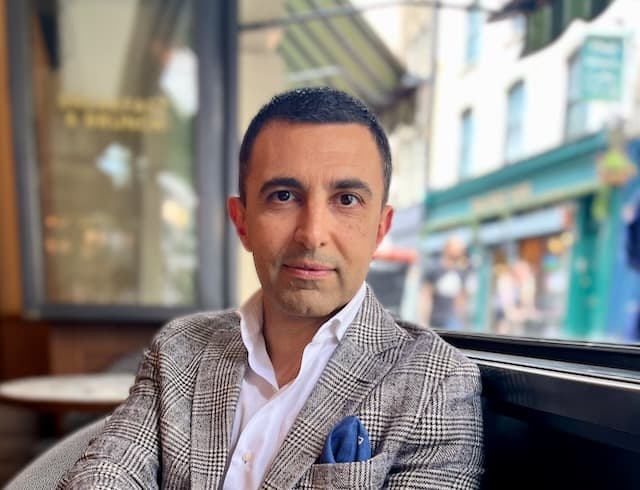
A career built through execution.
An institutional foundation
I began my senior leadership career within BG Group, later acquired by Shell, where I progressed from business analysis into country and global leadership roles.
As Head of IT and subsequently a Global Portfolio Director, I worked across business operations, major capital programmes and international technology portfolios.
At British American Tobacco, I led digital transformation across North Africa. My responsibilities included integrating the Sudan business following an acquisition, delivering the integration within 90 days, and redesigning commercial and technology operations across six markets.
These roles provided more than functional experience. They established the institutional grounding required to lead through complexity, manage capital responsibly and operate effectively across cultures and organisational boundaries.
From enterprise transformation to business building
At Benya, I worked from within the Chairman's Office across corporate development, investment, integration and new business creation.
The group was evolving from infrastructure contractor into a digital infrastructure holding company. My role included resolving a stalled post-acquisition integration, leading the corporate repositioning and helping develop the investment and operating logic for the next generation of businesses.
I subsequently helped incubate Benya Data Centres and Benya Cables, the latter developed in partnership with the Arab Organization for Industrialization. Together, these ventures represented a portfolio of approximately $70 million.
The experience marked an important progression in my career. I was no longer transforming individual functions. I was helping shape companies, investment propositions and new sources of enterprise value.
Taking direct operating responsibility
At Centro CDX, I became Managing Director of New Business at a point when parts of the portfolio had lost direction and were consuming capital without a credible path to growth.
I led the portfolio review, closed activities that could not be recovered and rebuilt KeepWell, the healthcare business that subsequently became TrueBlue MD. The proposition, operating structure and commercial model were redesigned, taking the business from sustained underperformance to break-even and seed investment.
I later invested in and joined Macber as an Equity Partner.
Macber had strong operational capability but was positioned as a local services company. I helped transform it into a regional, multi-product technology business, establishing a clearer commercial model, expanding its institutional client base and preparing it for growth beyond Egypt.
Within Macber, I created Macber Expo and developed Comet as a customer-funded SaaS product. Comet was part of the wider work of turning Macber's operational knowledge into scalable technology and recurring revenue.
Macber subsequently doubled revenue in each of two consecutive years, expanded into the UAE and the UK.
Technology as a capability
Technology has been present throughout my career, from global enterprise systems and digital infrastructure to operational software and AI.
It is not how I define myself.
Technology is one of the capabilities I use to solve business problems. The relevant questions are commercial and organisational: how does the business create value, how should its people work, how should the organisation operate, what should it build next, what must change for the next stage of growth.
The technology matters only when it helps answer those questions.
Beyond the operating role
Alongside my executive work, I contribute to the development and assessment of leaders, founders and companies.
I serve as an Executive Educator in Strategy and Innovation with Duke Corporate Education, working with government and enterprise leaders.
Through Founder Institute GCC, I have mentored more than 50 founders. As a judge for the Future 100 Initiative, I have assessed more than 60 emerging companies.
These roles provide an independent test of executive judgement. They require the ability to assess businesses, challenge assumptions and help leaders make better decisions without taking control away from those responsible for execution.
In summary.
Building businesses, scaling organisations and turning strategy into execution - across multinational corporations, regional holding groups and founder-led companies.